A template can lower the stress of a blank screen. It can also fill half the screen before you have said anything relevant. The difference is whether it gives you a structure or supplies sentences you are reluctant to change.
Think of a writing framework as a set of questions. What am I trying to do? What information does the reader need? What should happen next? Those questions work across many prompts. A paragraph about the importance of modern society does not.
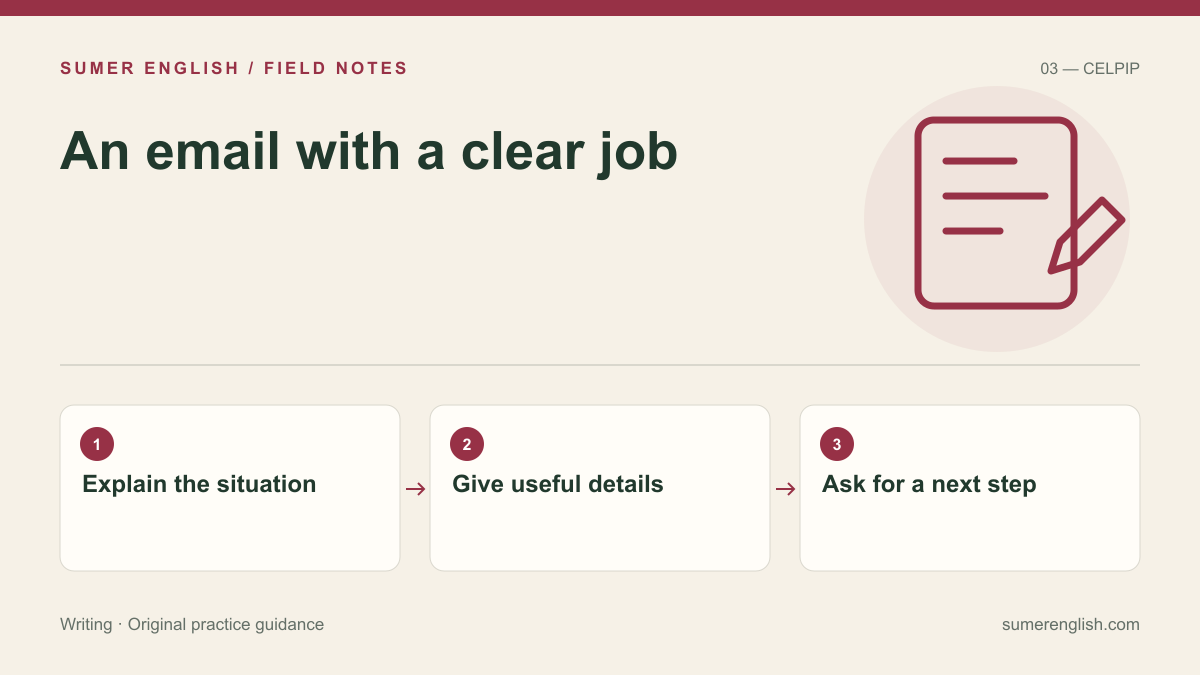
A flexible email framework
- Identify the recipient and choose a suitable greeting.
- State the reason for writing.
- Cover the instructions with concrete details.
- Make the request, invitation, recommendation or apology clear.
- Close in a tone that matches the relationship.
This is not a mandatory paragraph formula. Sometimes the requested action belongs in the opening. Sometimes a brief explanation should come first. The framework should help you see missing information, not force every message into the same shape.
For a delayed delivery, an opening might be: “I am writing about order 418, which was due to arrive on Monday.” For an invitation, it could be: “Our neighbourhood association is holding a repair workshop, and we would like you to lead the bicycle session.” Both establish a purpose immediately. Neither needs a long introduction.
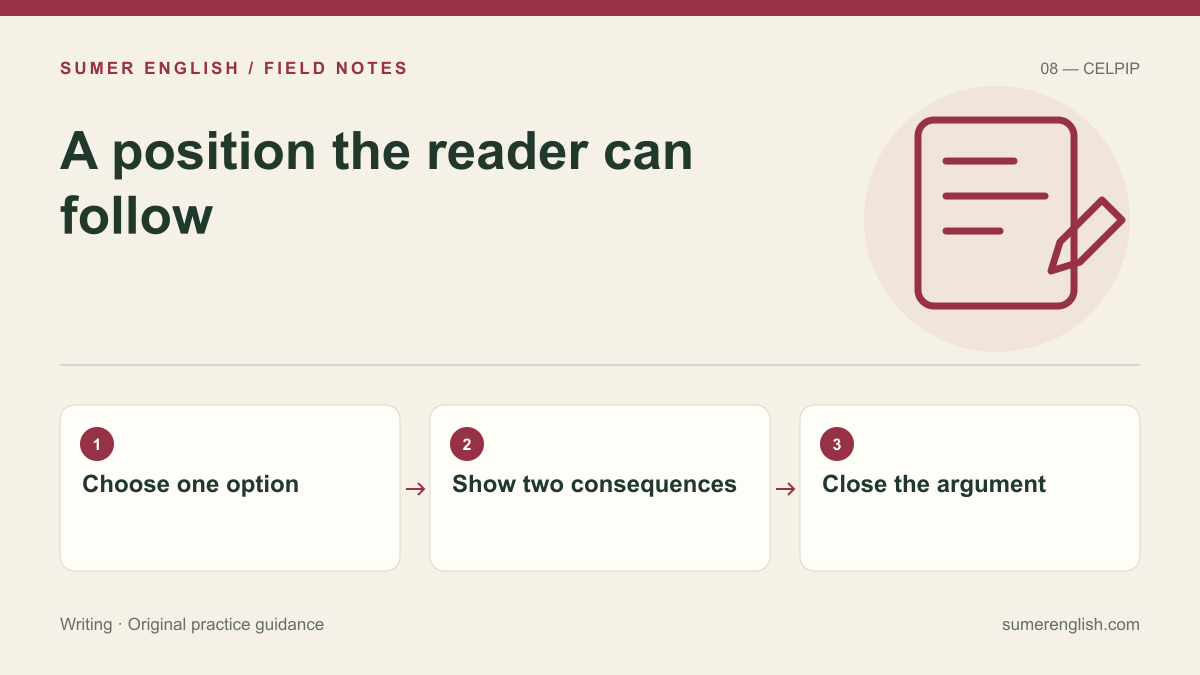
A flexible survey framework
- Make your choice clear.
- Develop the strongest reason with a specific consequence.
- Add a different reason, not a synonym for the first.
- Address a relevant trade-off if it helps.
- Finish with a concise conclusion that follows from the reasons.
If you choose a weekend bus service over a parking expansion, your reasons could concern access for people without cars and reliable travel for weekend workers. Saying “it is useful” and then “it is convenient” does not necessarily produce two different reasons.
Replace vague language with scenario details
Compare these invented sentences:
Generic: “This option would have a positive impact on everyone and improve the quality of life in many ways.”
Specific: “An earlier bus would let hospital staff reach the morning shift without paying for a taxi.”
The second sentence is not valuable because it contains harder words. It identifies a group, an action and a consequence. That gives the reader something to understand and gives you a direction for the next sentence.
Keep a small phrase bank by function
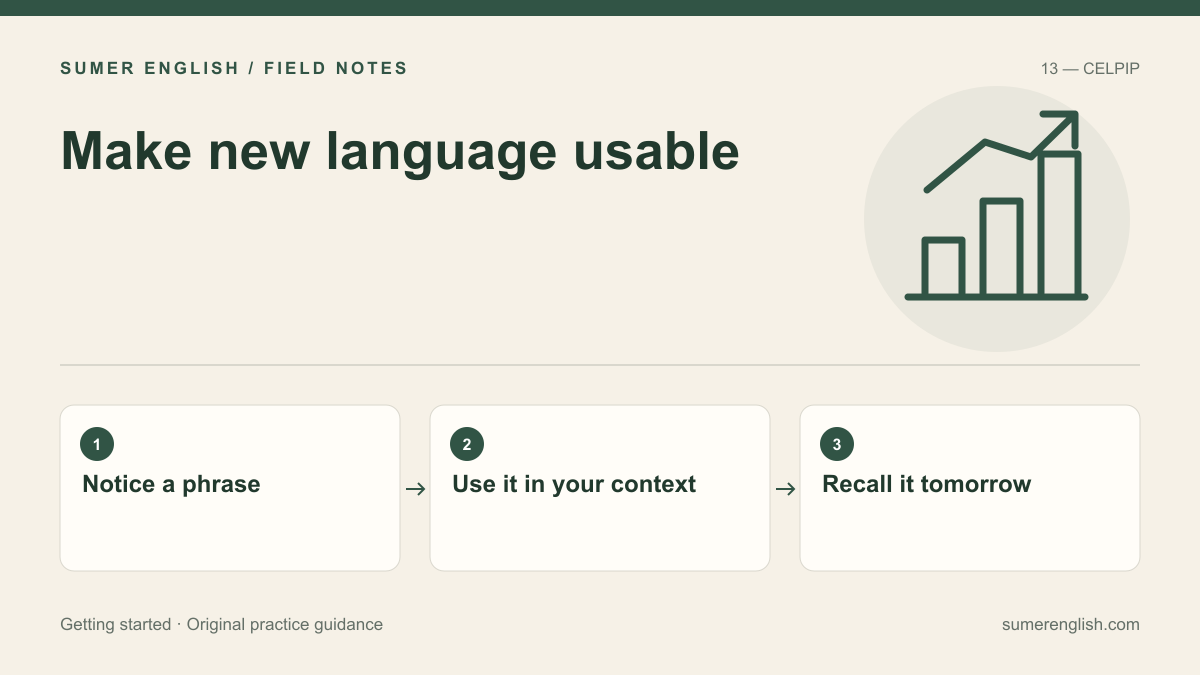
You can collect useful language without memorising entire answers. Organise phrases by what they do: request information, explain a consequence, acknowledge a disadvantage or suggest an alternative. “Could you confirm…” and “One drawback is…” are starting points, not finished arguments.
Check that you can use each phrase correctly in more than one sentence. If a phrase requires a grammatical pattern you do not understand, simplify it. A clear request is better than an ambitious opening followed by a sentence you cannot control.
The two-prompt test
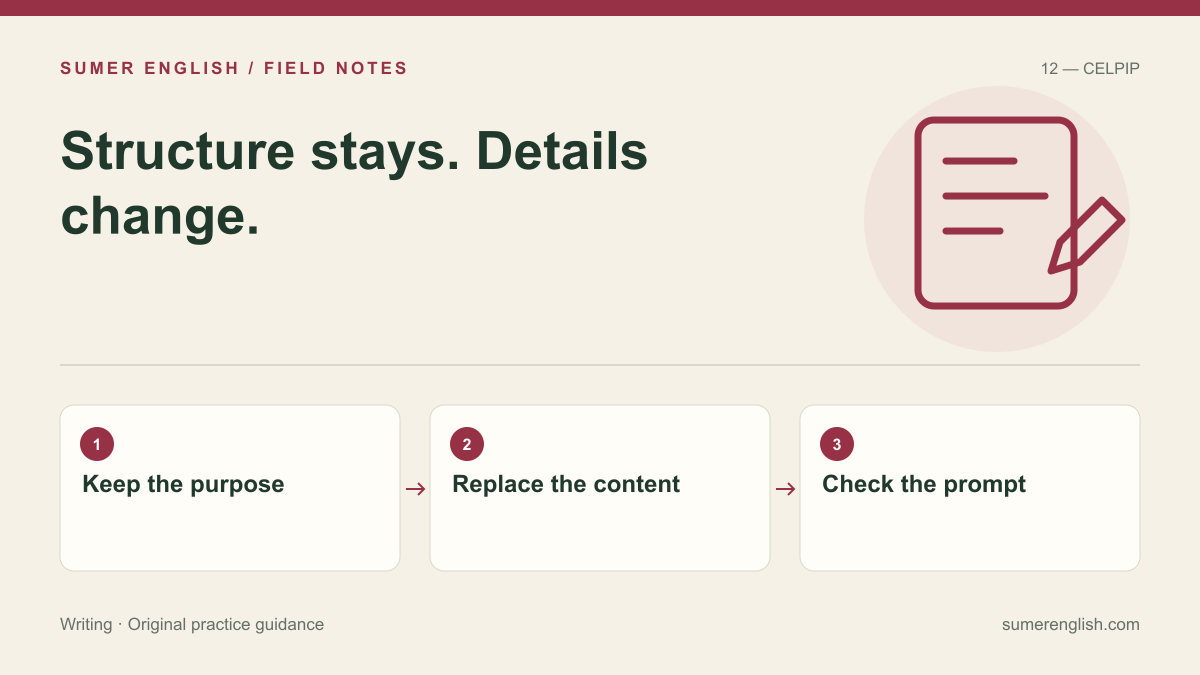
Write responses to two unrelated scenarios using the same broad framework. Then compare them. The organisation may resemble itself; the reasons, details and tone should belong to their own situations. If most of the sentences are identical, your template is probably doing too much.
Next, reverse the audience. Turn a request to a manager into a message to a neighbour. Notice what becomes too formal or too abrupt. This makes tone a practical choice rather than a label you attach after drafting.
Use the prompt as your final checklist
Before submitting a practice response, point to the sentence that answers each instruction. Check the current task’s word and time guidance, and leave enough space to edit. A neat structure cannot rescue an answer that discusses a different problem.
Our Writing practice prompts let you try that transfer across new situations. Use a framework to organise your thinking, then let the actual task determine what you say.
Sources & editorial notes
Official details checked on . Verify changing prices, policies and requirements with the relevant organisation.
Examples and practice advice are original Sumer English material, not official test questions or rated responses. Sumer English is independent of the CELPIP test provider. How we prepare these guides.