A free CELPIP practice test can tell you a lot. It can also give you a misleading burst of confidence if you already know the questions. The difference lies less in the resource than in how you use it.
Before searching for another download, decide what you want to learn: the format, your current pacing, or the reason you keep missing a particular type of question. One test does not have to do all three jobs at once.
Start with an official sample
The official CELPIP preparation overview links to its sample test and other preparation resources. Use official material to become familiar with the real task types and instructions. Follow the links from the official site rather than trusting a third-party PDF that calls itself an “actual exam.”
Independent practice has a different role: it gives you more opportunities to work on the skills. On CELPIP Test Online, the first two tests in each skill are free with an account. Additional tests are part of Pro. We are an independent preparation platform, not the official test provider.
Make the first attempt count
Set aside a quiet period and remove the aids you will not use during a timed attempt. Do not stop halfway through a recording to search for a word. If you need to pause because you are studying, that is fine—just do not compare the result directly with an uninterrupted attempt.
For Writing, save the version produced within the limit before revising it. For Speaking, keep the first recording. These imperfect attempts are more useful evidence than a polished answer you created after seeing a model response.
Sort errors before doing more questions
Mark every wrong answer with one main cause. A manageable set is comprehension, evidence, timing and attention. Comprehension means you did not understand the meaning. Evidence means you understood the passage but chose something it did not support. Timing means the clock changed your decision. Attention includes missing a negative or overlooking a condition.
Here is an invented example. A notice says that evening classes resume in October, except the photography course, which resumes in November. You choose October for photography. Learning more advanced vocabulary will not fix that mistake. Your next drill should focus on exceptions.
Some questions have more than one problem. Pick the cause that first sent you in the wrong direction. A useful log explains behaviour; it is not a courtroom verdict.
Review right answers too
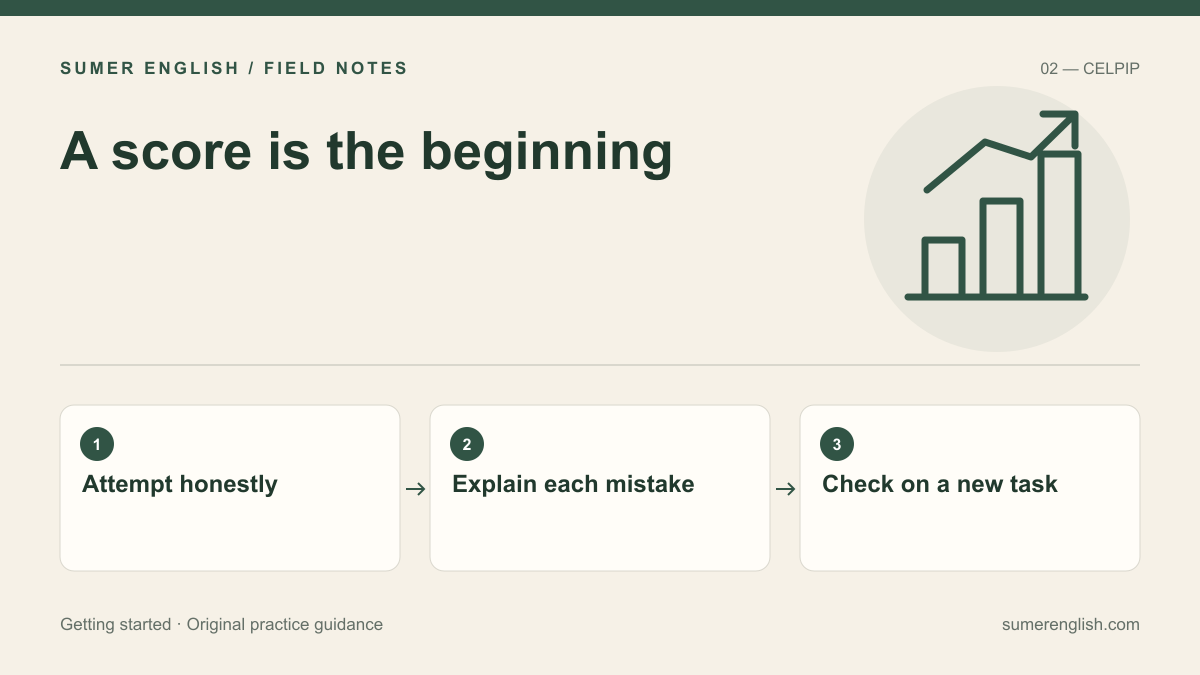
A correct guess can hide a weakness. Put a small question mark beside answers you were unsure about before looking at the key. During review, explain why the correct option fits and why the closest alternative does not. If you cannot explain the difference, there is still something to learn.
For a written or spoken response, review the task itself before worrying about impressive language. Did you address the intended person? Did you make the required choice? Does each reason have enough detail to make sense?
Retest the skill, not your memory
Repeating a familiar exercise can be useful for fluency or confidence. It is a poor way to estimate your readiness. Recognition saves time and makes the second attempt easier even when your underlying skill has not changed much.
After repairing a weakness, choose unfamiliar material that requires the same skill. Compare the process: did you notice the exception, locate the evidence, or finish your explanation more clearly? Keep the score, but record the behavioural change beside it.
A practical two-session routine
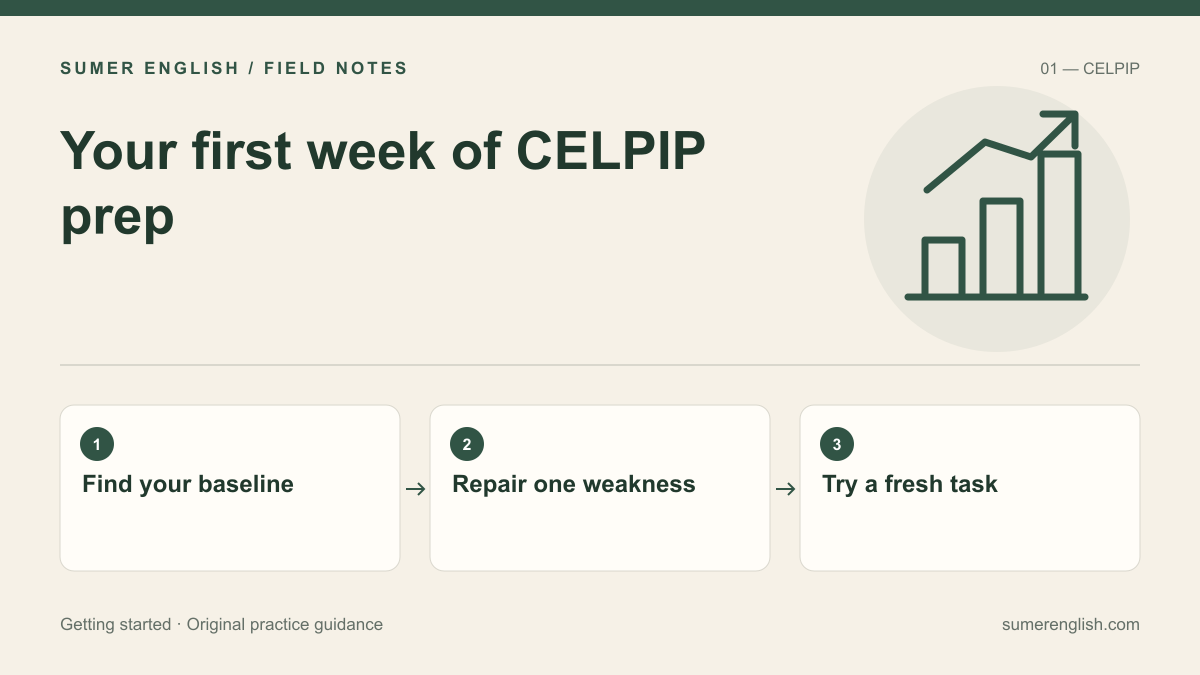
In the first session, complete a short timed section and identify two recurring problems. In the second, review one problem slowly, practise it on a fresh task, and write a one-sentence rule you can use next time. For instance: “When two choices look plausible, I will identify the phrase that rules one out.”
Free material is most valuable when it changes what you do next. You do not need an endless collection of tests. You need enough unfamiliar practice to see whether your corrections are working.
Sources & editorial notes
Official details checked on . Verify changing prices, policies and requirements with the relevant organisation.
Examples and practice advice are original Sumer English material, not official test questions or rated responses. Sumer English is independent of the CELPIP test provider. How we prepare these guides.